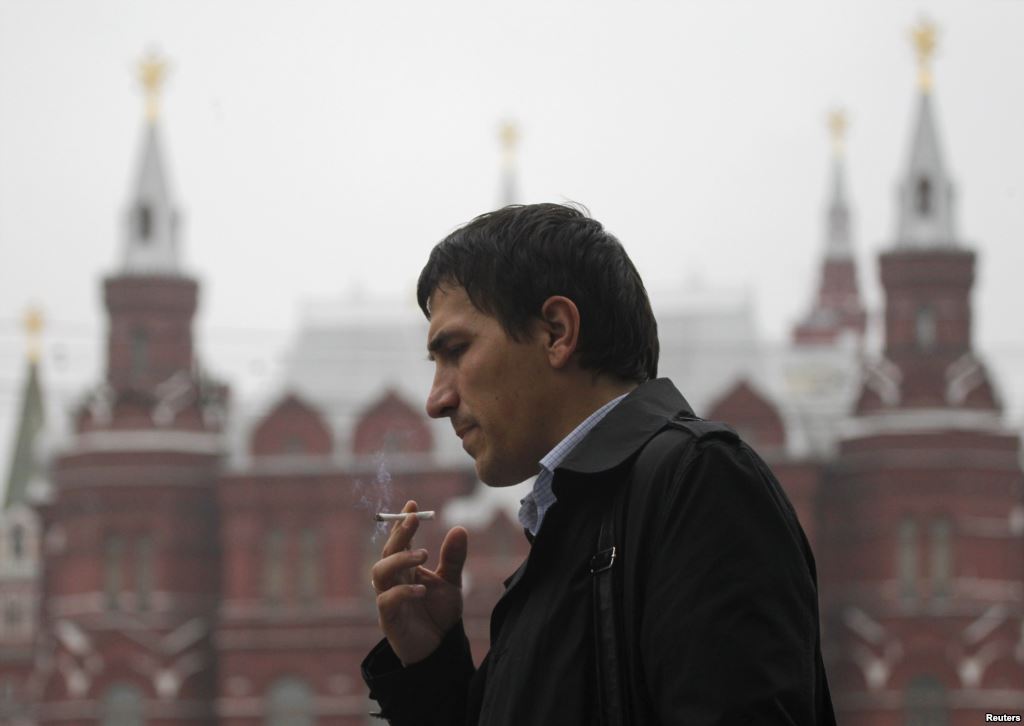
“The draconian nature of Russian law is softened by the non-obligatory
nature of its implementation”
An anonymous Russian saying
This week my blog post will consider the impact of chronic lung
disease within Russia, focussing in on the role of smoking related
disease, which amongst us medics is called COPD (chronic onstructive pulmonary disease). Please see the previous post if you would like an introduction to COPD.
As is often the case, Russia
has a unique situation, with its history, demographics and healthcare system
all playing their part. Intriguingly the situation of COPD in Russia has been a difficult topic to
research. Few studies seem to have been
completed to define its incidence or prevalence. With around 44 million smokers and rising,
Russia has the highest smoking total and proportional prevalence in Europe. Around 400,000 Russians are thought to die
from smoking related diseases each year.
There are also significant
barriers to primary care access and very limited screening. Together this suggests significant
under-diagnosis of COPD.
A primary health study conducted by Chuchalin et al within the Ryazan
region of Russia (Рязань; population 1,306,600), ran from October 2004 to March
2005 (1). Two districts were chosen,
within which 16 primary health centres were chosen at random for
recruitment. Subjects received lung
function tests and assessment for risk factors of chronic respiratory disease
in the form of a household survey. Results
showed that whilst men are at greater risk: 60% of men smoke; 40% of men have
occupational ‘dust’ exposure; prevalence of breathlessness, cardiovascular
disease and chronic respiratory disease is two times higher in women than
men. Despite this 14% of men reported
regular sputum production (4% women), suggesting some form of respiratory disease. Low lung function was noted in 14% of the
sample. Overall COPD prevalence was said
to be 1.6%, comparable with Russia as a whole.
It was noted that asthma treatment was also significantly underused,
complicating the picture somewhat (the main drug of choice is theophylline –
easily becomes toxic, many side effects, variable compliance).
What sense be made of this picture?
An extremely high level of smoking and occupational chemical exposures
(especially amongst men), yet low rates of COPD. I feel this study highlights some interesting
and pertinent points within the peculiar ‘Russian paradox’
A society in smoking transition
Russia has been a society in transition. As the soviet-era drew to a close, supplies
of many goods became scarce. Cigarettes
were no exception. This led to tobacco
rationing, triggering the so called ‘tobacco riots’ where angry smokers caused
chaos on the streets of Moscow and St Petersburg (2). The Russian government responded by relaxing
import laws, allowing multinational tobacco corporations to enter the Russian
market. With a population of 143 million
citizens, few sales controls, low product taxation, a country previously naïve
to marketing and eagerly desiring the western lifestyle, Russia was greatly
attractive (3). Today a pack of filtered cigarettes can cost
less than $1 (£0.65). As a result of the
above Russia has become the third largest market for tobacco in the world. All four major global tobacco firms now have
high stakes in the Russian market, competing hard against one another in their
sales drives. The tobacco lobby is a formidable
force affecting politics. With the health
impacts of smoking typically occurring in mid to late life, the long-term
impacts of the smoking boom are only now being fully realised. With smoking prevalence so high, COPD is an
ever increasing burden. Until recently
little public awareness of the connection between smoking and chronic lung
disease existed. Hence smoking prevention
is a relatively new concept!
Sociodemographic changes
Russia is said to be experiencing a demographic crisis. Deaths significantly outnumber births,
meaning a comparatively higher number of the elderly. Besides sub-Saharan Africa, the nations of
the former Soviet Union (FSU) are the only world region to be experiencing a
decline in life-expectancy. Key to this
is a huge gender disparity. Men die
increasingly young. As COPD likelihood
and severity increase with number of years smoked, many may never reach the
point of significant impairment. Men are
also less likely to attend healthcare facilities (some truths are
international!), and as such as less likely to receive a formal diagnosis for
their breathing problems.
Healthcare provision
A multinational survey from the international COPD coalition noted
several shortcomings in Russian COPD awareness and care provision (4). It was found that patients viewed their
symptoms as age/smoking related, rather than due to an underlying lung
condition. As a result, patients
generally presented at advanced disease stages and chose to attend their GP
rather than a respiratory physician.
Questions have also been raised regarding limited and outdated education
of COPD treatment amongst primary care physicians. Of those patients diagnosed with COPD,
further barriers to effective care exist.
Whilst oxygen, inhalers and antibiotic therapy are available within
Russia, provision varies depending on states and distance from large treatment
centres. Furthermore, treatment costs
are not fully covered by the government or private insurance schemes. As COPD is inversely associated with socio-economic
status, many people simply cannot afford regular or optimal treatment. Around 90% of formally diagnosed COPD
patients within Russia are not receiving treatment recommended by national or
international guidelines (5).
However it’s
not all doom and gloom - changes are happening…

Smoking cessation
In 2008 Russia ratified the WHO Framework Convention
on Tobacco Control, which called for a 10-15% decrease in smoking by 2015. In summer 2010 the Russian Ministry of Health
and Social development introduced warning labels on cigarette packaging for the
first time. Shortly after, President
Vladimir Putin signed the national tobacco control concept paper. Laws on public health relating to tobacco
consumption began to be debated and rewritten, including discussions on smoking
bans in public places, banning small tobacco retailers/kiosks, and limiting
tobacco advertising including banning display case advertising in larger
stores. From June 2013 smoking will be
banned in offices, school premises and around stations. From 2014 this will extent to all public
areas, including cafes, restaurants and long-distance trains. Significant fines for breaking the rules are
to be introduced (6).
Improved data collection, training and health services
Following on from the Ryazan study, COPD has now been
mapped within a further 10 regions. Over
the past 3 years 35,000 primary care physicians have attended seminars on COPD,
asthma, and smoking prevention. The ‘Pulmobil’,
a mobile COPD diagnosis and management centre was also unveiled in summer 2012,
with the intention of enhancing service provision and coverage. Studies are now on-going to assess the impact
of these measures, including health centre utilisation by COPD patients.
Public
awareness and attitudes
Media campaigns highlighting the health impact of smoking are increasingly
common in newspapers, magazines and on television. President Vladimir Putin has also publicly
stated his desire for greater smoking cessation. Surveys have shown mixed public opinion on
the proposed changes; greater smoking controls for indoor public places such as
offices and schools have generally been accepted; resistance has however been
felt towards smoking bans covering shared stairwells, beaches and parks. Increasing tobacco taxation also remains a politically
sensitive topic, in particular amongst the industrial class, a loyal electoral
base for President Vladimir Putin.
Critics of the proposed laws cite some impracticalities in the
authoritarian nature of the rules and also question a lack of support for those
wanting to quit smoking (7). As is a
common issue within Russia, it remains to be seen how rigidly the new rules are
enforced.
Concluding remarks
COPD has long been underdiagnosed and undertreated in Russia. Demographic changes are likely to exacerbate
this situation in years to come. The
past five years have seen major changes in Russia, with increased public
awareness, smoking controls and medical provision. Whilst greater access to diagnostic facilities
and provision of treatment is required, further barriers to COPD recognition
can be overcome.
Thank you for reading this far - as usual, any comments greatly appreciated!
References
1) World
Health Organisation (2006) Global Alliance Against Chronic Respiratory
Diseases, Report of General Meeting 2005, Geneva. [online] Available at:
http://www.who.int/respiratory/publications/WHO_NMH_CHP_CPM_05.4_eng.pdf
[Accessed: 4 May 2013]
2) Greenstone.org
(1997) Untitled. [online] Available at:
http://www.greenstone.org/greenstone3/nzdl;jsessionid=E020827CE566B08981881AF4BB7ED8FE?a=d&d=HASH2255c5db003ea388a30032&c=cdl&sib=&ed=1&p.s=ClassifierBrowse&p.sa=&p.a=b&p.c=cdl
[Accessed: 30 Apr 2013]
3) Holmes D. Smoking in Russia: will old habits die
hard? Lancet. 2011 Sep 10;378(9795):973-4.
4) Scheld,
J. (2007) ICC Country Report "Faces of COPD". The
International COPD Coalition
5) World
Health Organisation (2013) Global Alliance Against Chronic Respiratory
Diseases, 7th General Meeting Report (2012), St Petersburg. [online]
Available at: http://www.who.int/gard/publications/GARDGMReportStPetersburg2012.pdf
[Accessed: 4 May 2013]
6) Rt.com
(2013) Crackdown on smoking: Putin signs radical anti-tobacco bill into law
— RT Russian politics. [online] Available at:
http://rt.com/politics/putin-signs-radical-anti-smoking-bill-into-law-389/ [Accessed:
4 May 2013]
7) Harding,
L. (2013) How will Russians cope with the smoking ban?. [online]
Available at: http://www.guardian.co.uk/world/shortcuts/2013/feb/25/will-russians-cope-smoking-ban
[Accessed: 1 May 2013]
Images
Image 1 – http://gdb.voanews.com/44A8821F-E0E1-4B9B-A29A-71D9255FA12C_mw1024_n_s.jpg
Image 2 – http://stoletnik.ru/articles/novosti/2013/03/01/v-rossii-zapretili-kurit-v-liftax-i-pod-ezdax/


